
EF staff
Language Learning for Deeper Cross-Cultural Understanding
Jennifer Watt | August 14, 2018
EF staff
Jennifer Watt | August 14, 2018
The second language I remember learning was telling time. As a toddler, I measured time by concepts–time to get up, time to feed and water the horses, time to eat, time to do the chores, bath time, reading time, time to go to bed. In an era that still pre-dated digital clocks, I vividly remember being confounded by the idea that time belonged to a wheel with spinning sticks attached at the center. Everything about learning how to tell time, including why do it at all, was like pushing on a pull door–which one surprising night I finally opened up with a flood of understanding. Compared to learning to read, write, speak, and think in another language, learning to read a clock was a simple trick. Yet as I’ve clambered through various stages of learning another language, I have found that each new achievement comes with a similar rush of excitement and thrill–as something once vexing becomes easy.
I focused on Social and Cultural Anthropology in college because of my inherent passion for languages and multicultural diversity. My goals in work and in life have continued in this vein; bringing people together to better understand themselves and each other from a local and global perspective. My experiences living with families in different countries greatly enhanced my ability to communicate and grasp the extraordinary potential for human interactions and multicultural exchanges. Most importantly, I found that being able to speak various degrees of the language in France, Thailand, and throughout Latin America forged a mutual bond of respect and a willingness to give and share between myself and my hosts and friends. Furthermore, learning to think in different languages continues to enhance my mental creativity and flexibility.
Learning another language is one of the most exciting and creative processes I know. One’s brain is wired to communicate in one’s first language and must naturally find new pathways to express oneself in another. Figuring out how to say something is one thing, but equally, interpreting what someone is saying in another language can be illuminating or puzzling. Living in Nicaragua in 1991, I met a man who reeled off “Gary-no-te-dijo-que-rasgo-la-barruga?” My translation–Gary didn’t tell you I scratch my belly?–left me scratching my head. I quickly learned that Nicaraguans speak almost entirely in colloquialisms and visual metaphors. That man was telling me that he plays guitar. Language is amazing in and of itself, and still, communication extends far deeper than literal translation.
Recently I was working on a project where we were translating an interview in which questions were asked in Spanish, answers were delivered in Quechua, and translations were requested in English. I have heard Quechua described as a fundamentally poetic language that infuses life and character traits into all things. The snow-covered volcanoes are Gods, or rather, they are imbued with sacred and godlike nature when the word Apu is placed as a title in front of the volcano’s name. These Apus feature deeply in the dialogues of daily life, in which even the sound of a cricket’s wings could well be considered a musical messenger, transmitting news, prayers, and requests, to the glaciers and gods. Hearing how the translations we were working with sounded in English made me wonder just how much of the deeper bones of expression we were missing.
I feel it is imperative that our younger generation be exposed to foreign languages with a true opportunity to practice what one has learned in an experiential, active, and authentic environment. I have personally found encouragement for speaking any amount of their language from the locals in any given culture. Being able to find the right words or listening in on a multi-person conversation with a greater capacity for comprehension inspires confidence and a deeper cross-cultural regard. Having guest speakers in the classroom, especially when combined with a culturally themed event, can provide an atmosphere of authenticity. Those close to home experiences might be just the right catalyst to inspire further exploration abroad. I have seen no greater joy in the faces of our travelers than when they succeed in communicating in a foreign language with the locals whom they are visiting.
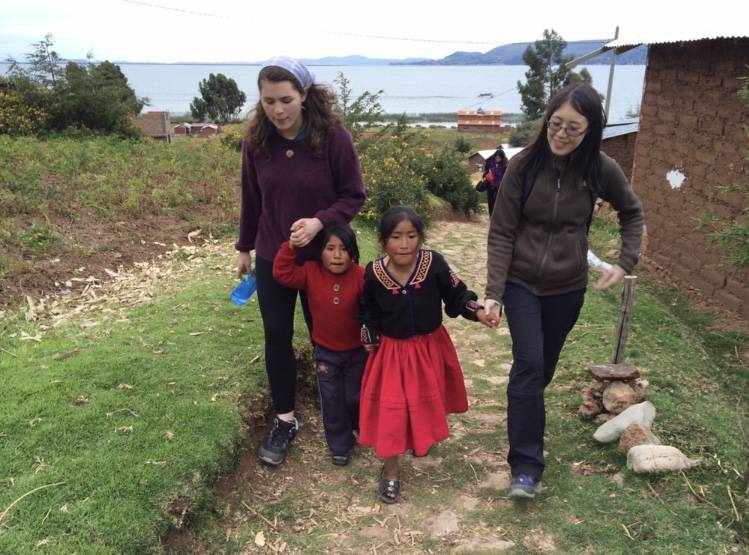
In a small community on the shores of Lake Titikaka, groups are given the opportunity to stay in little bungalows that serve as hotel accommodations and are connected to local families with whom they share meals in small groups of twos and threes. While Spanish is generally spoken in these families, their first language is Aymara. I recall a wonderful moment with a group in which two Spanish speaking sisters offered to split themselves up to room separately with classmates who didn’t speak any Spanish. I will never forget the pure joy shining from all their eyes on the first morning after arrival. They couldn’t tell me fast enough how amazing their experience had been the night before, because they, in fact, hadn’t resorted to Spanish at all, and instead communicated with the help of their language pamphlet, in Aymara, to tell their hosts just how delicious the meal was and how happy they were to be there. “Jen, we didn’t even need Spanish. We spoke Aymara! But–we were all smiling and laughing so much we hardly needed words at all!” And that language, the one of people engaging and connecting with laughter and joy, is always at hand, no matter what state one’s local vocabulary is in! It’s the effort, and the opportunity, that count.
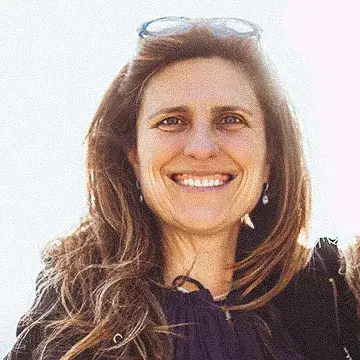
Before joining EF in January of 2012, Jennifer taught people of all ages (from grade school to grad school), specializing in experiential, environmental and science education. She taught in rural and urban settings here at home in the US, and in Nicaragua, Botswana, Peru, and Ecuador. She is a passionate advocate for immersive intercultural experiences as a gateway for catalyzing personal growth and life-altering experiences, and has been to Peru more than 40 times!
Explore our unique tour collections that bring learning to life across inspiring destinations.



