• Enroll
  • Help center
    • All Destinations
      • Asia
      • Latin America
      • Europe
      • South Pacific
      • Africa
      • US & Canada
    • Europe
      • Spain
      • Italy
      • France
      • Greece
      • Switzerland
      • England
    • Latin America
      • Costa Rica
      • Panama
      • Peru
      • Ecuador
      • Belize
      • Dominican Republic
    • Asia
      • South Korea
      • Japan
      • Thailand
      • Vietnam
      • Cambodia
      • China
    • Featured:
    • Popular tours
    • Black Friday deals
    • Subjects
      • Career & Technical Education Tours
      • STEM Tours
      • History Tours
      • Art, Music & Theater Tours
      • Language Tours
    • Collections
      • Starter Tours
      • Career Readiness Tours
      • Middle School Tours
      • Global Leadership Summit
      • Community Engagement Tours
      • Tours for Girls
      • View all
    • How it works
      • Plan your first tour
      • Pricing & inclusions
      • Request a free brochure
    • Why choose EF
      • Educational impact
      • Best-in-class safety
      • Personalized support
    • Teacher benefits
      • Teacher training
      • Global Rewards program
      • Credit & professional development
    • EF & Educational Travel
      • About EF
      • Educational travel 101
      • Find your teacher’s tour
      • Booking Conditions
    • Safety & Support
      • Our approach to safety
      • Peace of Mind Program
      • Travel protection
      • Meet your people
    • Pricing & Inclusions
      • Payments made easy
      • Everything that’s included
      • Fundraising & scholarships
    • Getting Ready to Go
      • Passports & visas
      • Flights & transportation
      • Trip packing list
      • Rooming & meals
      • Adult travelers
Contact usLog in
  1. Home
  2. Travel Blog
  3. Places and Perspectives
  4. Richard III DNA Results Possibly Calls British History into Question

History

Richard III DNA Results Possibly Calls British History into Question

Zach Michonski | December 29, 2014
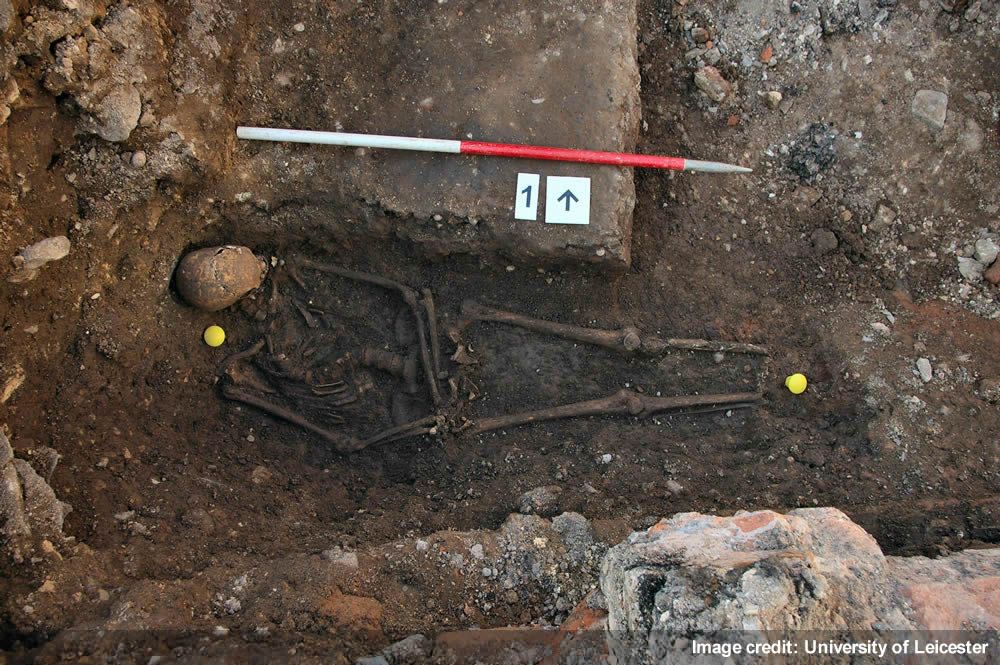
King Richard III Skeleton

Just in case succession of the British throne wasn’t already confusing enough, it just became a bit more complicated. In 2012 a skeleton, believed to be King Richard III, was found buried beneath a parking lot in Leicester, England. In order to prove that the remains belonged to Richard III, scientists performed a DNA test that would decisively confirm whether or not the skeletal remains matched the DNA of his descendants.

Results revealed that the remains did, in fact, match Richard III’s maternal descendants, but not the DNA of his royal paternal descendants. Scientists however, still believe the skeleton is that of Richard III’s. Dr. Turi King of Leicester University, who led the study, was quoted by the BBC as saying, “If you put all the data together, the evidence is overwhelming that these are the remains of Richard III.”

While scientists are confident in their findings, we now can’t help but ask, “Was there a break in the royal blood line?” Century old rumors of illegitimacy have plagued the royal bloodline, sullying the reputations of figures like John the Gaunt, the son of Edward III. Scientists and historians are unable to say with certainty when this particular infidelity occurred, but if it was traced back to Edward III (1312 – 1377), the great–great grandfather of Richard III, it could potentially bring into question a large part of England’s history.

The House of Plantagenet, which Edward III belonged to, included two rival house branches. A series of ongoing conflicts between the House of York and the House of Lancaster created what is known as the Wars of the Roses. Like Richard III (House of York), Henry Tudor, who was aligned with the House of Lancaster, was a descendant of Edward III. One could argue that if Henry Tudor did not have royal ancestry connecting to Edward III he would not have been able to obtain the Lancastrian support needed to defeat Richard III at the Battle of Bosworth, where Richard III was killed. Richard III’s death not only put an end to the Wars of the Roses, but also allowed Henry VII to claim the throne and begin the Tudors’ reign of the monarchy. To put it simply, the Tudor dynasty may have never existed.

Many of us know history based on what scholars and historians tell us, and rightfully so. Historians spend countless hours uncovering and studying the events that preceded us. But the beauty of history is that in many parts of the world we can travel back in time and stand where kings stood and where battles were fought. History isn’t something that we should just read about, but experience and reflect upon up-close.

Zach Michonski

Zach Michonski

Ready to make the world your classroom?

Explore our unique tour collections that bring learning to life across inspiring destinations.

Browse tours
divider_desktop
divider_mobile

Related articles

Leaning Tower of Suurhusen in Germany

History

Leaning Tower of Suurhusen

Geography

Friday Fun Fact: Kaffeklubben Island

Global Leadership Summit

Q&A: Sam Kass on changing the world through food and travel

Footer

We're here to help

Contact us
Help Center

Learn more

How it works
About EF
Customer Reviews
Visit our blog
Careers at EF

Other EF brands

EF Explore America
EF Language Abroad
EF Tours for Girls
EF Educational Tours Canada
EF Adventures
EF Ultimate Break
EF Go Ahead Tours
EF Gap Year

Stay connected

Contact us
Help Center
How it works
About EF
Customer Reviews
Visit our blog
Careers at EF
EF Explore America
EF Language Abroad
EF Tours for Girls
EF Educational Tours Canada
EF Adventures
EF Ultimate Break
EF Go Ahead Tours
EF Gap Year

Stay connected

Privacy Policy and Legal Notices

© Signum International AG 2026. All rights reserved.