
History
Preserving the World’s Most Iconic Stadiums
Zach Michonski | August 13, 2013
History
Zach Michonski | August 13, 2013
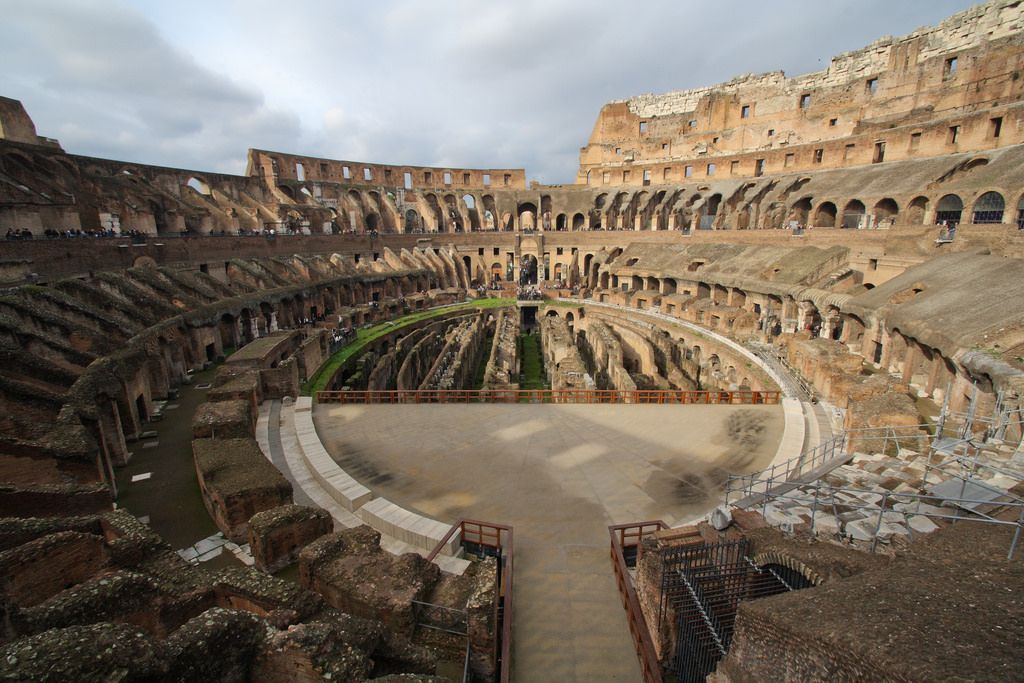
I recently read an article in The Guardian that Rome had closed roads surrounding the Colosseum in order to help preserve its structure. Over the years, vibrations and air pollution from cars had blacked the Colosseum’s stone, and in recent years caused stone to fall. Student trips to Rome have always been a popular EF tour choice. The historic structure and staple of ancient Roman culture attracts around six millions visitors each year, and it is seen by many as the greatest athletic stadium ever built. So, with that in mind, the decision by the newly elected mayor, Ignazio Marino, wasn’t too surprising. It did get me wondering, however, what modern day and world renowned stadiums may also someday be in need of similar preservation efforts.
Alberto J. Armando Stadium – Buenos Aires, Argentina
Alberto J. Armando Stadium, also known as “La Bombonera” (The Chocolate Box) because of its box-like architectural design, opened in 1940 and currently holds a capacity of 49,900. The stadium is home to the Boca Juniors soccer team and, due to the stadium’s striking acoustics, team supporters have received the name “La Doce” (The 12th Man).
Azteca Stadium – Mexico City, Mexico
Home to the Mexican national soccer team, Azteca Stadium opened in 1966 and is the 5th largest stadium in the world, holding a capacity of 105,064 people. To date, Azteca is still the only stadium to hold two FIFA World Cup Finals – one in 1970, and the other in 1986.
Camp Nou – Barcelona, Spain
It’s not uncommon for EF Group Leaders to pencil in a stop at Camp Nou when scheduling student trips to Barcelona. The home of soccer team FC Barcelona is the largest stadium in Europe, with a capacity of 99,786 fans. Since its opening in 1957, Camp Nou has hosted two UEFA Champions League finals, as well as the 1992 Summer Olympics.
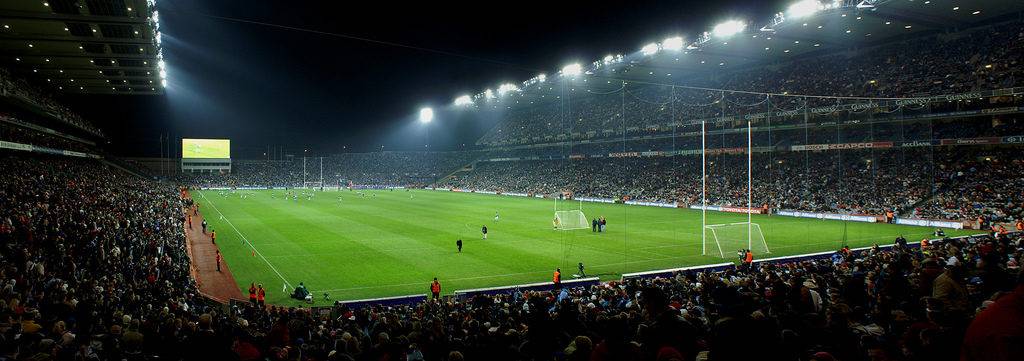
Croke Park – Dublin, Ireland
This year, the iconic stadium and home to the Gaelic Athletic Association celebrates its 100th anniversary. With an age like that, it comes as no surprise that Croake Park comes with a long and dark history – most notably, it was the site of the Bloody Sunday massacre that occurred on November 21, 1920, during the Irish War of Independence.
Fenway Park – Boston, United States
Fenway Park also celebrated its 100th anniversary last year, making it the oldest stadium in Major League Baseball. Since opening in 1912, Fenway Park has hosted 11 World Series. However, Fenway may be most famous for its thirty-seven foot tall left field wall, known affectionately as “The Green Monster.”
Maracana Stadium – Rio de Janeiro, Brazil
Maracana Stadium first opened its doors to the world in 1950 for the FIFA World Cup. Brazil and its famed stadium will once more become a melting pot for cultural immersion next summer, at the 2014 FIFA World Cup.
Melbourne Cricket Ground (MCG) – Melbourne, Australia
With a capacity of 100,018 people, “The G” is the largest stadium in Australia and largest cricket stadium in the world. After 159 years, MCG, home to the Melbourne Cricket Club, still stands as one of the world’s most famous sporting venues in the world. In 2005 the stadium was officially placed on the Australian National Heritage List, marking it as a place of outstanding heritage significance to Australia.
Old Trafford – Manchester, England
Opened in 1909, Old Trafford is quite possibly home to world’s most famous soccer club – Manchester United. In 1940 and 1941, in the middle of World War II, the stadium was bombed and Manchester United was forced to play at Maine Road, the home of Manchester City FC. Since being restored in 1951, Old Trafford has hosted the 1966 FIFA World Cup, 1996 UEFA Euro Cup, and the 2012 Summer Olympics.
San Siro – Milan, Italy
San Siro is home to famed soccer clubs AC Milan and Inter Milan, who together have won a total of 10 UEFA Champions League titles. Since its opening in 1925, capacity has grown from 26,000 to now 80,018 people. The stadium hosted the UEFA Champions League finals in 1965, 1970, and 2001. In 1990 San Siro was also one of Italy’s twelve stadiums to host the FIFA World Cup.
Soccer City – Johannesburg, South Africa
Soccer City is only 24 years old but is already an iconic and historic setting in South Africa. Although the stadium hosted the 2014 FIFA World Cup, Soccer City is much more well-known for the famous speech Nelson Mandela gave on February 13, 1990, just days after being released from prison. Mandela stood in front of over 100,000 people and demanded racial equality and an end to apartheid in South Africa.

Explore our unique tour collections that bring learning to life across inspiring destinations.



