
Art
How to Engage Your Students With Art
Ty | September 23, 2016
Art
Ty | September 23, 2016
Ty is entering his tenth year of teaching. While he originally began his career as a history teacher, he now teaches visual arts. This year he will be taking his 200th student abroad in the spring of 2017. Ty’s love of travel was sparked as a young adolescent and so he strives to provide his students with the same eye-opening and culturally rich experiences that he once had as a student. In this piece, Ty shares a lesson that he does with his students to help prepare them for museum visits on tour.
Not every high school student chooses to take visual arts, and based on my experience of teaching a 9th grade course, not every student that chooses to, really does so with an honest interest. When on an EF Tour, it is not uncommon to have the opportunity to stop at art museums such as the Louvre or the Prado. For students who lack an interest in the Arts, it can be easy for them to become disengaged; missing out on the culturally enriching experience that visiting a museum can provide.
Given the pace of a tour, it’s impossible to even glimpse all the work on display at many large museums (for example, the Louvre has 35,000 paintings in its collection). The travelers that get the most out of their museum visits are those that don’t try in vain to see it all, but rather those that know how to look at a fewer pieces more carefully. Below is an activity that I do with my student travelers to encourage them to think about art in a three-step process. My hope is that through this activity students will learn how to think critically about the famous works of art they encounter abroad. It is also a great way to get your group together, get to know each other, and get everyone excited for your upcoming trip!
Step One – The Basics
Identifying the title, media of the piece, the artist, his/her background and the year of its creation is a good place to begin your discovery. Often, this is all the concrete information a viewer might know about the piece of work. Plus, this information is usually found on the nameplate next to the piece.
To show your students how useful this information can be, I recommend asking them a few “What if I told you?” questions to illustrate how basic information can help shape one’s first impression of a piece.
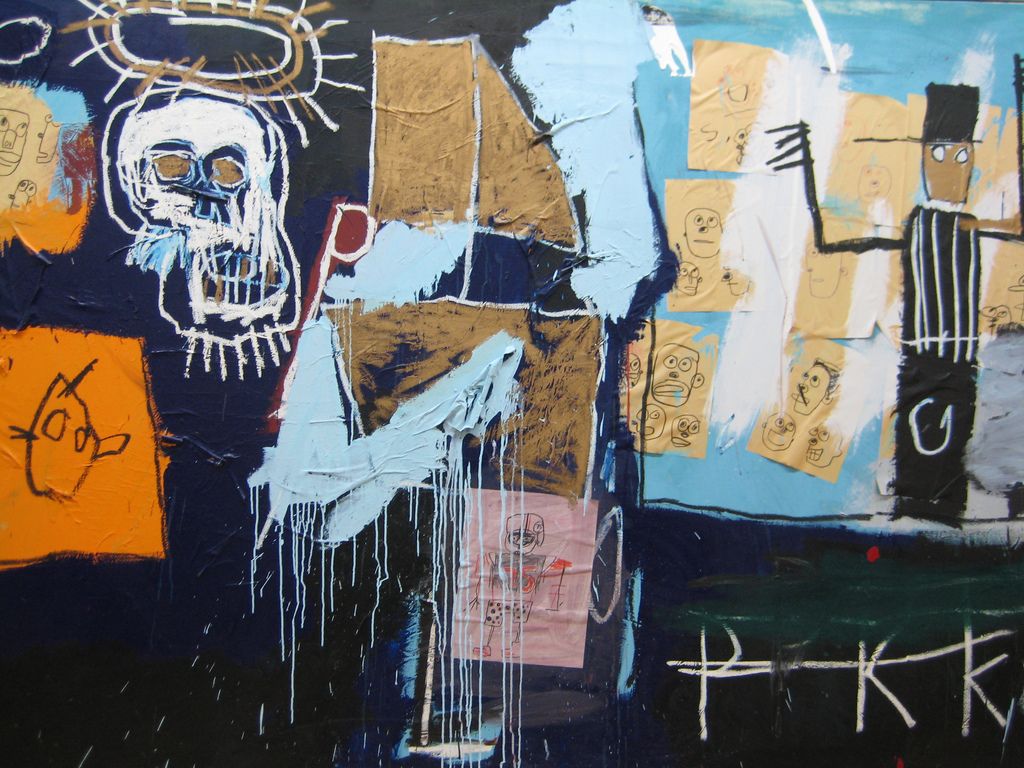
For example, look at Jean Michel Basquiat’s The Slave Auction from the Centre Pompidou in Paris and see if any of the following “What if I told you?” questions and possible directions of discussion shape your experience of the piece.
The Slave Auction, Jean Michel Basquiat
Question: “What if I told you the title of this piece is The Slave Auction?”
Perhaps this could lead to further contemplation of the visual content, including what the simple figures might be representing. Does a narrative unfold?
Question: “What if I told you this piece was created by a 22 year old?”
Maybe this could lead to further contemplation of the primitive style of representation. Why would the artist create such a basic, almost ‘childish’ image if he were a young adult at the time it was painted? Is the age of 22 too young to create meaningful, impactful work, or does work from younger artists have more impact as it can be more ‘raw’ or immediate?
Question: “What if I told you this piece was created by an American?”
Perhaps this could lead to thinking about the artist’s connection to his country’s culture and when connected to the title, his ideas about race and slavery. Is the artist making a statement? If so, what kind is he making?
This first step can lead to travelers gaining more confidence about approaching a piece based on some very basic connections and questions gleaned from a simple nameplate. The next two steps help to dissect the visuals and then connect them to some of the initial ideas formed during the first step.
Step Two – Visual Content
This step focuses on the simplest question about a piece of visual art: What is it that you’re looking at? Viewers should thoroughly examine the visual content of the piece from left to right, top to bottom without trying to dig below the surface. Focus on the very basics in trying to unpack all that is (and isn’t) included.
A two-part activity to explore this step can lead to some entertaining results and can be quite useful in developing a visual vocabulary.
Have the travelers prepare to draw informally in either pen or pencil on a blank paper. Choose a piece from a museum that you will visit on tour and read out a basic visual description without showing the piece. The goal is for your students to take in your description and sketch out what they see based on your words. For the sake of time, it is much easier to skip over color and focus on basic content. Displaying the text descriptions as you read them out to your students can help as well.
Here is an example of a description based on Jean Francois Millet’s The Gleaners, found in the Musée D’Orsay in Paris:
The Gleaners, Millet
When you’re finished reading out the descriptions, have the students compare each other’s work. The differences between the sketches can be quite entertaining. After you’ve compared everyone’s sketch, display the Millet painting for a final comparison.
This step forces your students to only focus on the visuals and to take in the entire composition. When applied to viewing paintings in a museum, encourage students to create an inner monologue of a similarly basic description of the visual content of the piece.
Step Three – Deeper Levels
In this step, travelers will look deeper into the visual content and attempt to draw out messages, purpose and impact. The basic information about the piece and some of the questions and speculations discovered during the first step can be combined and perhaps verified with the more thorough look at the visuals in the second step.
Like the first step, using a series of questions with an example image displayed can be used to facilitate discussion of deeper levels in a piece. Focusing these questions on choices the artist made can lead to travelers discovering some of the subtext of a piece. As these are more probing questions, for the sake of time it may be better to leave these hanging with the travelers rather than allow time for them to be answered by the group.
Here are some example questions based on Théodore Géricault’s Raft of the Medusa from the Louvre using details that would be discovered in the second step:
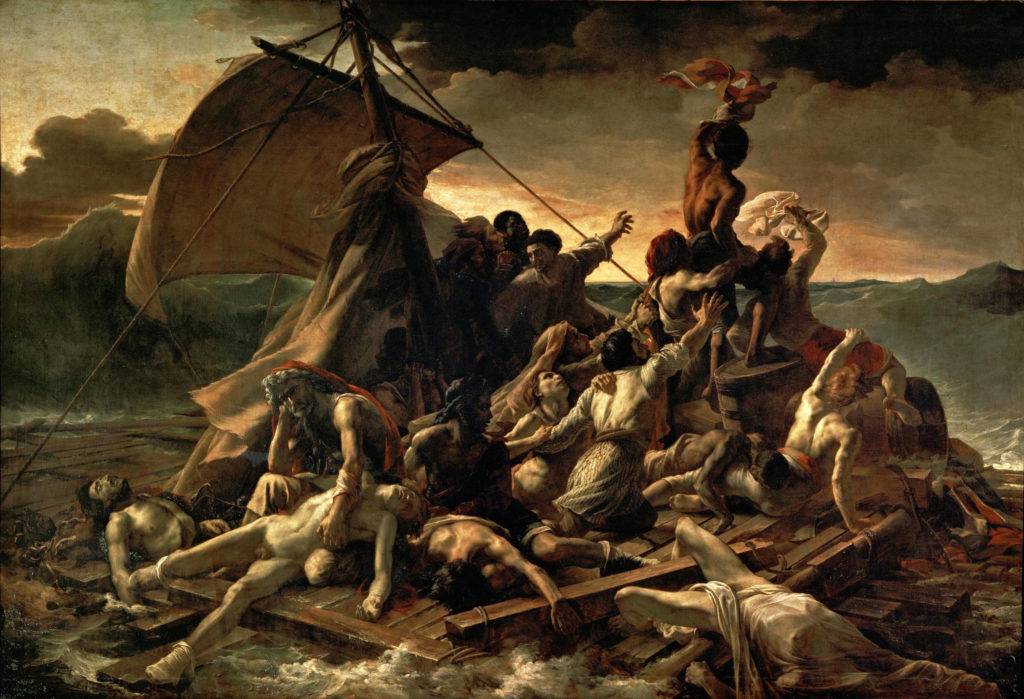
Théodore Géricault, Raft of the Medusa
The ‘answers’ to these questions may vary between travelers and lead to more intrigue and desire to delve into the work after leaving the museum.
Create a richer experience for your group
Providing a framework for deeper discovery to those students who would be more apt to run through a museum without thinking, or sit in the lobby and play on their phones can lead to a much richer experience for the entire group. Interest is contagious. One student’s desire to remain engaged with a painting for longer can encourage nearby travelers to do the same and those lingering, deeper questions about a piece can make for far more interesting bus conversation than, let’s say, the strangeness of potato chip flavors in France. I hope these activities help you and your students make the most out of your museum visits!
Looking to one day roam the halls of museums like The Louvre and The Prado with your students? Chat with a Tour Consultant now.

Explore our unique tour collections that bring learning to life across inspiring destinations.



